the current
In The Old Man and the Sea, the current is far more than a mere physical phenomenon; it is a constant, shaping presence that defines the rhythm of Santiago's journey, the nature of his struggle, and the ultimate outcome of his ordeal. It acts as a silent collaborator, a conveyor of both life and death, and a final, indifferent measure of his fate, binding the old man, his prey, and the vast ocean into a single, inescapable system.
The Current as a Collaborator and a Force of Nature
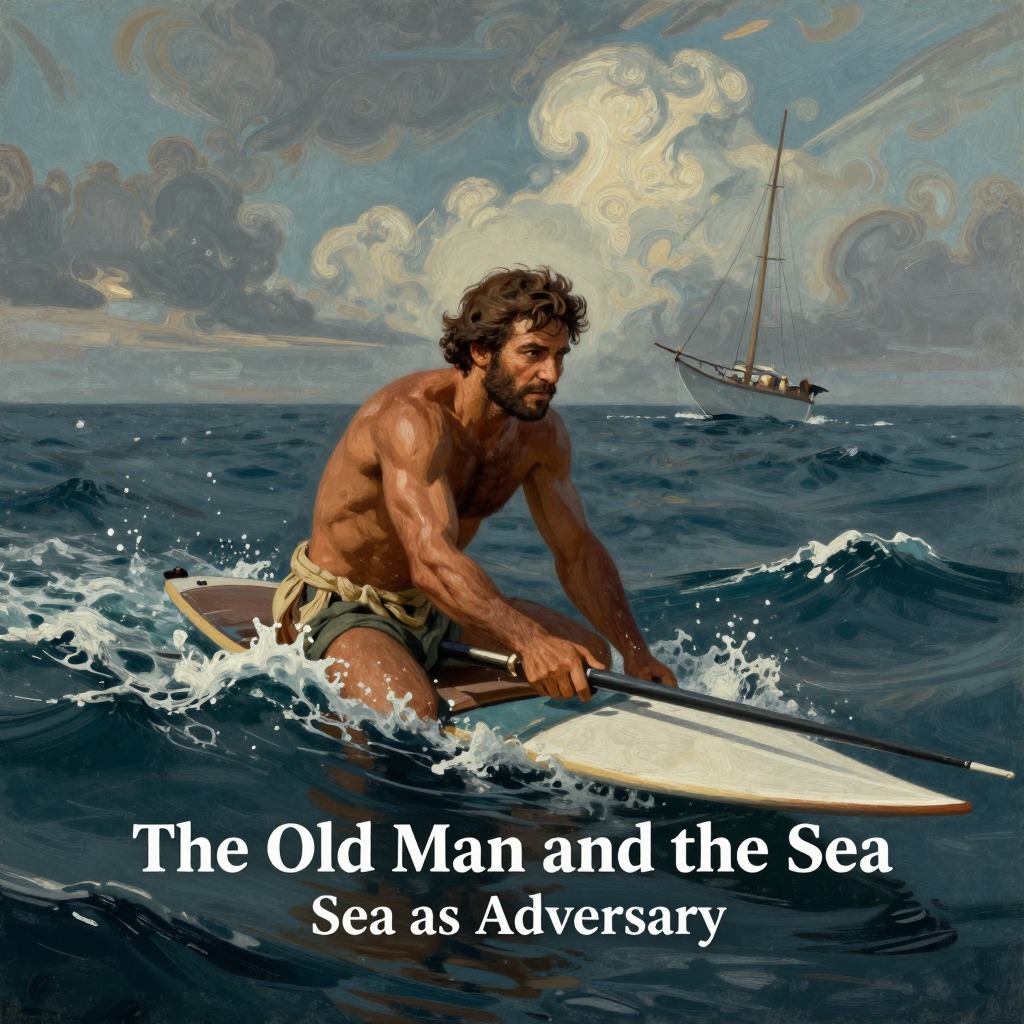
From the very beginning, Santiago works with the current, not against it. As he rows out on the morning of his great battle, he lets the current do a third of the work, a sign of his deep, practical knowledge of the sea. He thinks of the ocean as feminine, as la mar, something that gives or withholds great favors, and the current is a primary expression of that giving. He knows that the moon affects the sea as it does a woman, and he relies on the current's predictable flow to carry him to the fishing grounds. This collaboration is not passive; it is a partnership born of a lifetime of experience. The current is also the architect of the underwater landscape he knows so well. He rows over a place the fishermen call "the great well," a sudden deep of seven hundred fathoms where the current's swirl against the steep walls of the ocean floor concentrates shrimp, bait fish, and squid, drawing all sorts of fish to feed. The current creates the very conditions for life and for the hunt.
The Current as a Conveyor of Scent and a Herald of Sharks
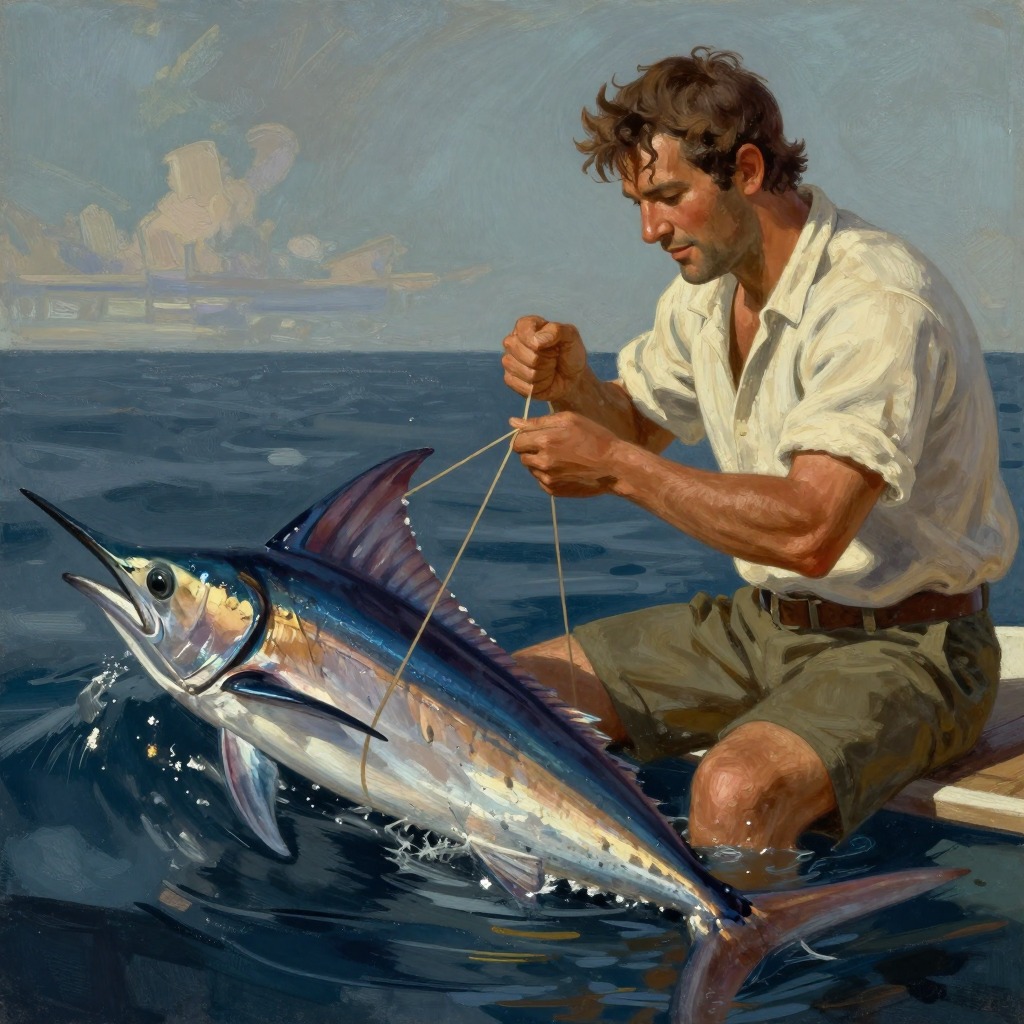
The current's role shifts from collaborator to betrayer after Santiago kills the marlin. The blood from the fish's heart, dark as a shoal in the blue water, spreads like a cloud, and the current carries this scent down into the mile-deep sea. It is the current that delivers the first Mako shark, which comes up from deep down in the water as the dark cloud of blood settles and disperses. The current becomes a highway of scent, a trail as wide as a highway through the sea, that draws every shark in the vicinity. Santiago knows this pattern well; he knows that the scent will bring more sharks, and he is right. The current, which once helped him find the fish, now ensures its destruction by delivering his enemies to him. He later reflects that he violated his luck when he went too far outside, and the current, by carrying the scent so efficiently, becomes the instrument of that violation's consequence.
The Current as a Measure of Distance and a Guide Home
Throughout the ordeal, the current serves as a constant, silent navigator. Santiago checks his course by the stars and by the glow of Havana, but he also reads the current. When the glow of Havana is not as strong as he expects, he knows the current must be carrying them to the eastward. The current is a force that can alter his course, a variable he must constantly account for. After the sharks have stripped the marlin to a skeleton, the current becomes his final, indifferent partner. He feels he is inside the current now and knows he can make it home. The current, which had carried him out to the great fish and then delivered the sharks, now carries the ruined carcass and the exhausted old man back toward the shore. It is the current that brings the skeleton, a great long white spine with a huge tail, into the harbor where a party of tourists mistakes it for a shark. The current, in the end, is the force that returns the evidence of Santiago's triumph and tragedy to the world, a final, impersonal act that completes the cycle of his journey.